About the lab
The thesis
We’ve known what works since 1984. That year Benjamin Bloom measured the effect of one-to-one mastery tutoring: the average tutored student beat 98% of a conventional classroom, a two-sigma jump. The finding was never the hard part. Delivering it was.
The same holds for the rest of our queue. Scheduling memory against the forgetting curve, fixing the incentives an assessment creates, verifying a skill without a four-year proxy, returning feedback fast enough for a brain to learn from it: each has a known answer that no system could afford to deliver. Cheap computation is what changed that.
What the lab does
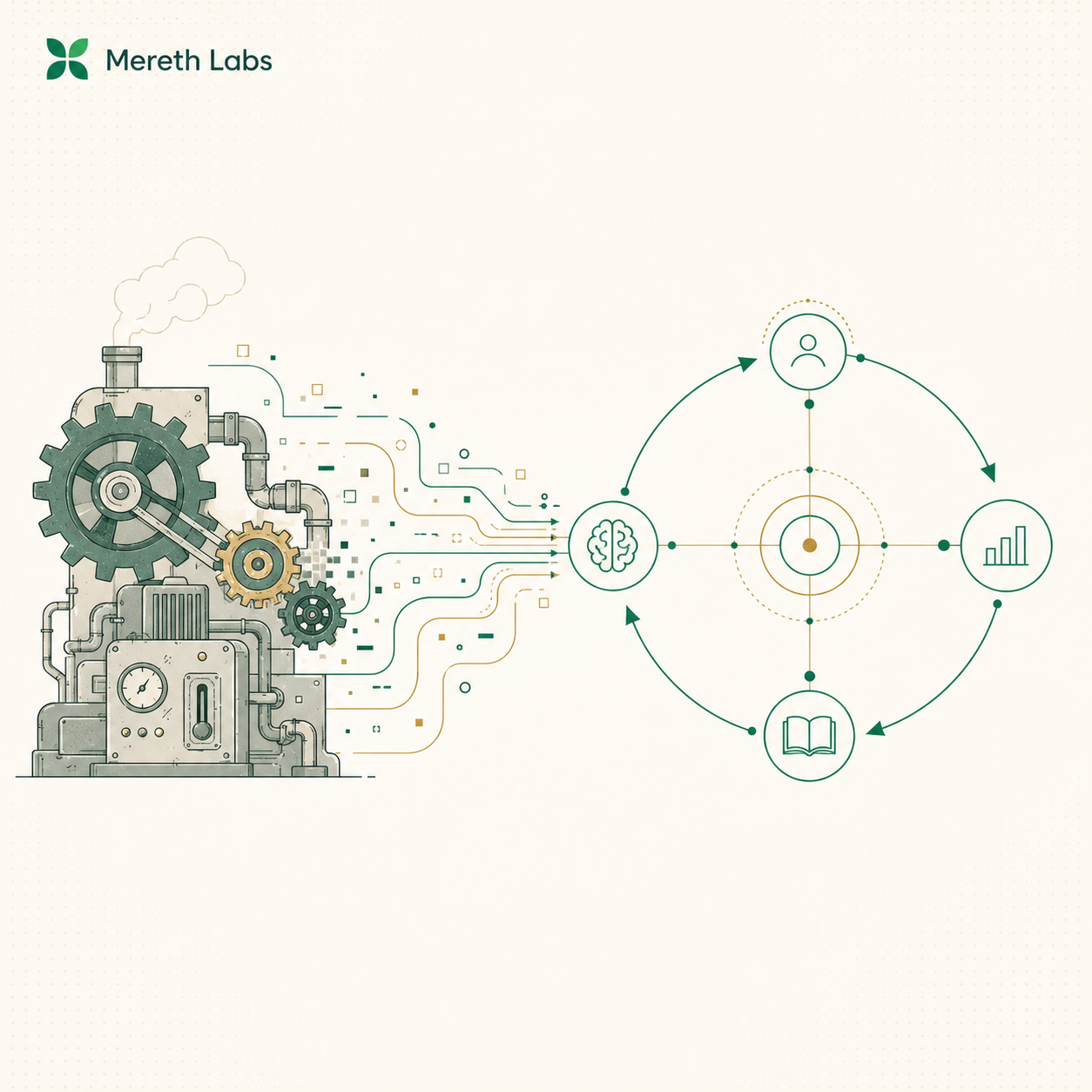
Mereth Labs works on long-standing problems in education, and especially the ones that turn out to be engineering or system-dynamics problems in disguise: structural, algorithmic and resource-allocation bottlenecks. The kind you fix by designing a better system, realigning an incentive, or reaching for technology that didn’t exist when the problem was first posed.
A finding that stays in a paper helps no one. Everything we research is built to leave as a product, on one of two sides:
- Consumer tools give an ordinary learner something close to a private tutor, at a price they can actually pay.
- Institutional infrastructure is the tooling organisations need to teach, assess and hire on evidence instead of proxy.
Where we are
Mereth Labs is at day one. We’re looking for collaborators and good problems to start on. If you build, teach, fund, or just think this is the right way to frame the problem, say hello.
Bengaluru, India · est. 2026
Nothing published here yet. The first pieces are in the works.